A stopcock is the main valve that turns off the water supply to your home. If a pipe bursts or a tap will not stop running, knowing where it is and how to close it can limit the damage while you wait for help. It takes a minute to find and a few seconds to turn.
What the stopcock does
The stopcock sits on the incoming water main and controls the cold water that enters the property. Closing it stops the flow to the kitchen tap, the bathroom, the cisterns and the pipework that feeds them. Water already sitting in pipes and tanks will still run for a short while, so do not expect the flow to stop instantly. Outside taps fed from a separate supply may keep running, and a shared supply in a flat can behave differently.
Where to look
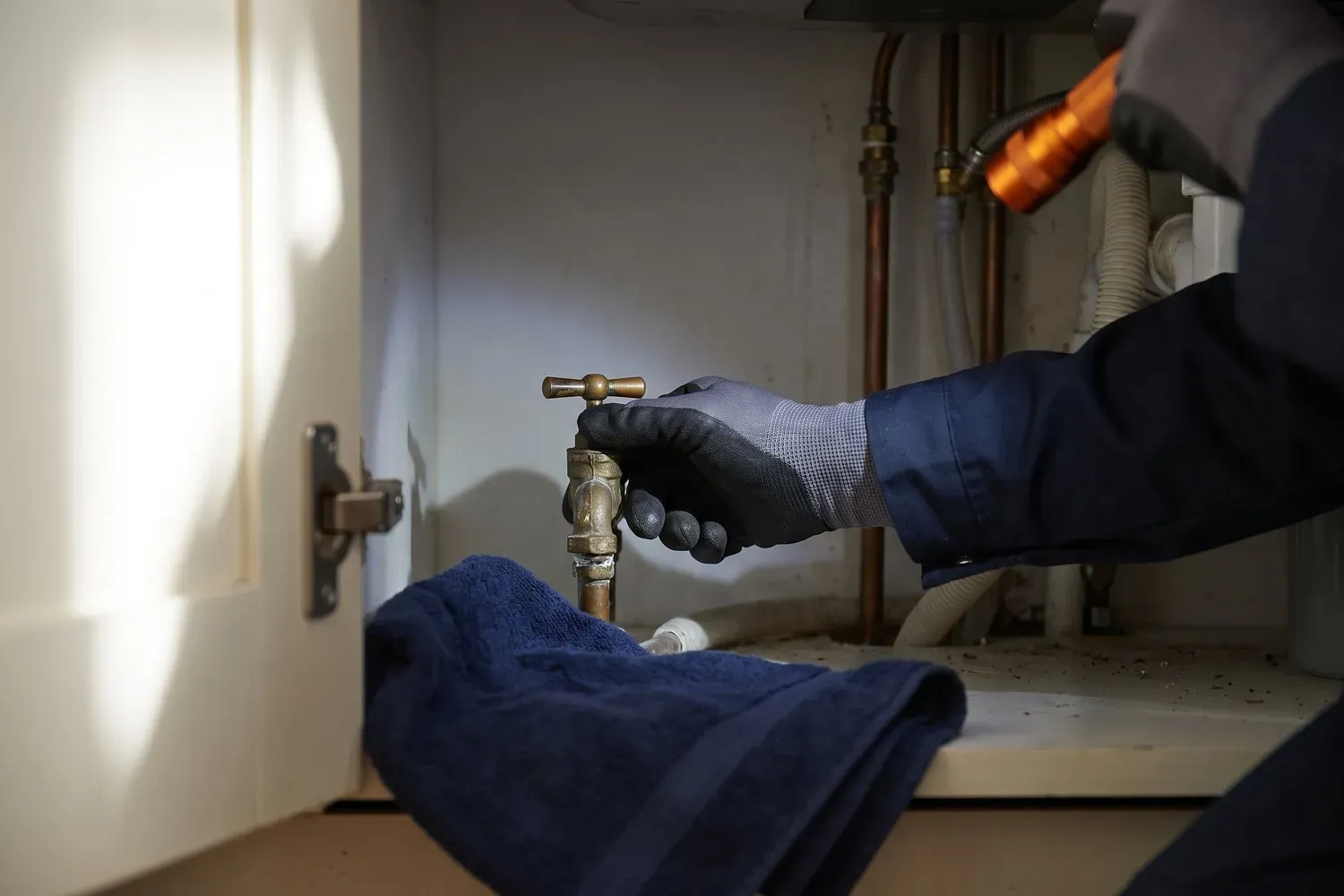
Most stopcocks are under the kitchen sink, close to where the main pipe comes up through the floor. If it is not there, check a downstairs cloakroom, a utility room, an airing cupboard or the cellar. In older houses it is often beside the front door or under the stairs. Look for a brass or plastic tap on a pipe, usually with a small handle that turns a quarter or a half turn. Some homes have two: an internal stopcock and an outside stop valve under a small metal cover near the boundary. The outside valve usually needs a long key, and your water company can tell you where it is and how to use it.
If you live in a flat, ask the building manager where the supply enters your home. A communal riser may serve several flats, and the valve for your flat should still be inside your own space, often in a service cupboard or beside the meter.
How to turn it off
- Find the valve and clear the space around it so the handle can turn fully.
- Turn the handle clockwise, the same direction as closing a normal tap.
- Open the kitchen cold tap to release the pressure and confirm the water has stopped.
- Flush the toilet once to empty the cistern if you need the pipework clear.
- Leave a tap open while you work, so any remaining water can drain away.
If the handle will not move
Older stopcocks seize up. Do not force the handle with a bar or a pair of grips, because the spindle can snap and leave the valve stuck open. A little gentle movement back and forth is safe, and a small amount of silicone spray on the spindle can help. If it still will not turn, call a plumber rather than risk a leak. Once a year, turn the valve a little and back again to keep it free.
After the water is off
Tell everyone in the house, and put a note on the tap so nobody opens it by mistake. If the repair is quick, the water can go back on as soon as it is done. Open the stopcock slowly and watch the joints for drips. Air in the pipes can make the taps splutter for a moment, which is normal. If a joint keeps weeping after the water is back on, turn the supply off again and get it looked at. It is also worth writing down where the stopcock is and keeping the note inside a kitchen cupboard, so the next person does not have to search for it in a hurry.