A radiator that is warm at the bottom and cold at the top usually has air trapped inside. The air stops the hot water filling the whole panel, so the room never heats properly. Bleeding the radiator lets the air out and takes a few minutes per radiator once you know the steps.
When a radiator needs bleeding
The telltale sign is a temperature difference across the panel: hot near the pipes, cool or cold along the top. You may also hear gurgling or ticking when the heating starts. Bleeding is worth trying before you assume the radiator or the boiler is faulty. It will not fix a radiator that is cold all over, which usually points to a closed valve, a blockage or a problem with the heating system.
What you need
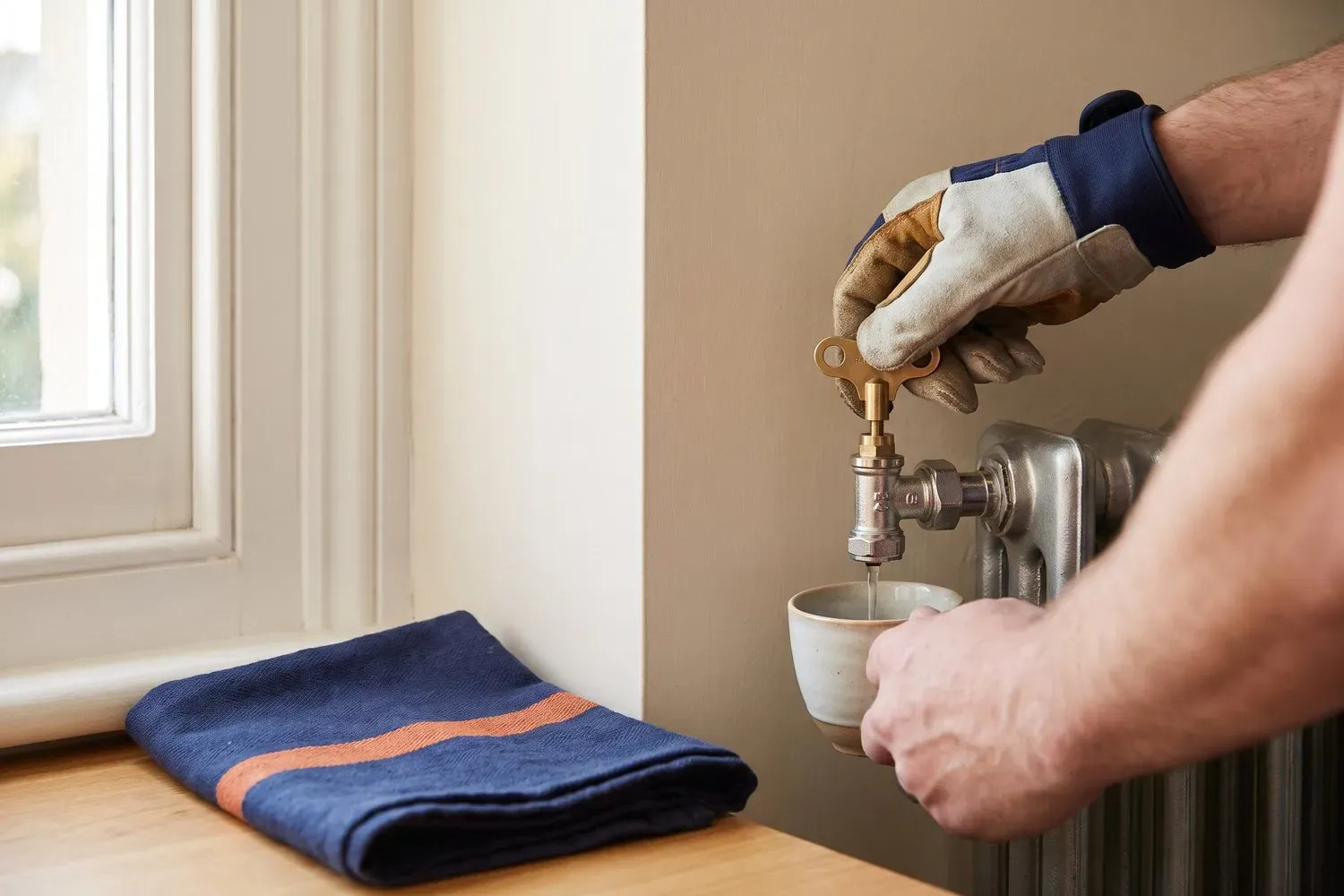
A radiator key, a cloth or small towel, a cup or shallow container, and a little patience. Most modern radiators have a bleed valve at the top at one end, with a square spindle inside. Old keys are sold at any hardware shop, and some valves take a small screwdriver instead. A small mirror helps if the valve sits close to the wall. Work with the heating off and the radiators cool, so you do not scald yourself and the system is not running while it is open. If you have several radiators to do, start with the one furthest from the boiler and work back towards it.
Bleeding a radiator in five steps
- Turn the heating off and wait for the radiators to cool completely.
- Put the cloth under the bleed valve and hold the cup below it to catch drips.
- Fit the radiator key and turn it anticlockwise, no more than a quarter turn, until you hear a hiss.
- Let the air out until water starts to trickle steadily, then close the valve clockwise.
- Wipe the valve dry, check for drips, and repeat on any other cold-topped radiators.
After bleeding
On a sealed system, such as one fed by a combi boiler, letting air out lowers the water pressure. Check the gauge once the heating is back on and top up through the filling loop if it has dropped below the maker's range. Follow the instructions for your boiler, and do not overfill. On a system with a feed and expansion tank in the loft, the level should recover on its own, but check that the tank has water in it if the radiators stay cold.
When to stop and ask
If water rather than air comes out as soon as you open the valve, the radiator does not need bleeding. If the valve leaks after you close it, turn the heating off and get it seen to. Air that returns within days, cold spots at the bottom of the panel or a boiler that keeps losing pressure all point to a different problem, such as trapped sludge, a failing part or a small leak. Those need an engineer rather than another go with the key.